
Age-related macular degeneration (AMD) is a leading cause of vision loss among Americans over 50, according to the National Eye Institute. It often develops subtly, and early symptoms can be easily dismissed as tired eyes, poor lighting, or an outdated glasses prescription.
Those small changes deserve a closer look. AMD affects the part of the eye responsible for sharp, detailed sight, and catching it early gives your eye doctor more ways to protect your vision.
Here are seven early warning signs of macular degeneration to watch for and what to do if you notice them.
What Is Macular Degeneration?
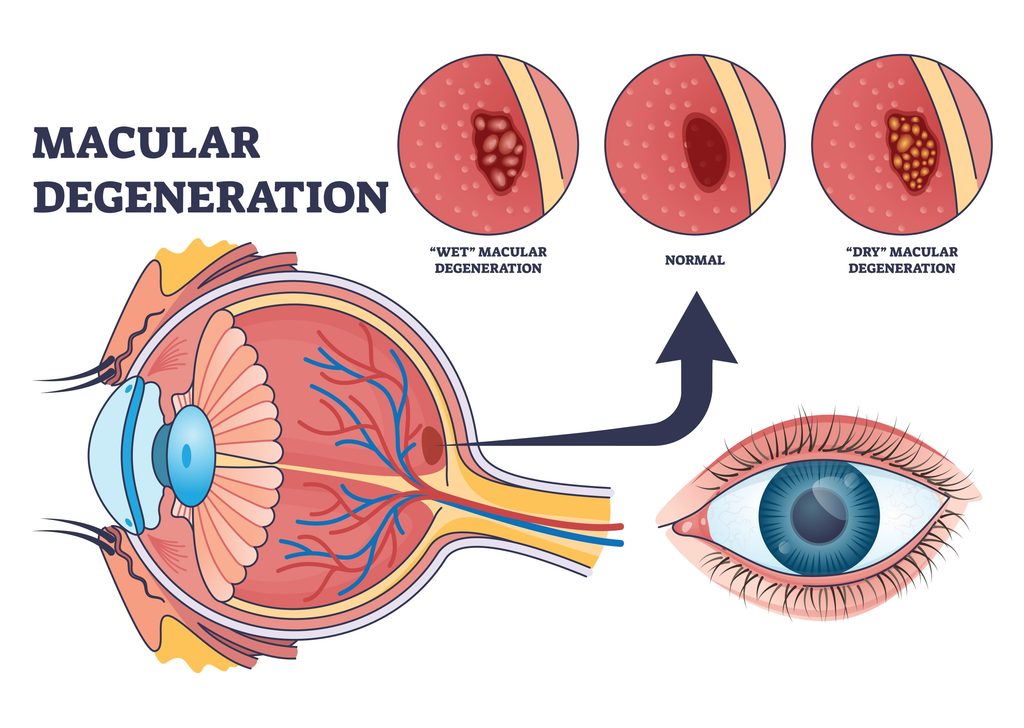
The macula is a small area at the center of the retina, the light-sensitive tissue lining the back of the eye. It supports central vision, the detail you use to read a menu, drive, thread a needle, or read someone’s expression.
Age-related macular degeneration happens when the macula deteriorates over time. The dry form accounts for roughly 80 to 90 percent of cases and progresses slowly as the macula thins and yellow deposits called drusen build up beneath the retina.
The wet form is less common but more serious. Abnormal blood vessels grow under the retina and leak fluid or blood, which can damage central vision within weeks.
AMD often affects one eye before the other. When that happens, the healthier eye compensates, so many people miss early changes until both eyes are involved. Covering one eye at a time can reveal problems that stay hidden when both eyes are open.
7 Early Symptoms of Macular Degeneration
Early AMD often causes no symptoms. When changes do appear, they tend to be subtle and gradual.
1. Blurry or Fuzzy Central Vision
The macula holds a dense concentration of cone cells, the photoreceptors responsible for fine detail and color. When these cells break down, the center of your vision can look soft or smudged while your side vision stays clear.
No other part of the retina can make up for that lost detail, so the blurring often shows up first during reading or other close work. Many people assume they simply need stronger reading glasses.
2. Straight Lines That Look Wavy or Bent
Door frames, tile lines, window blinds, or lines of text may appear warped or bowed. Eye doctors call this metamorphopsia, which happens when changes beneath the macula distort the retina’s surface.
An Amsler grid, a simple square of straight lines with a dot in the center, lets you check for this at home one eye at a time. Report any new waviness to your eye doctor.
3. Needing Brighter Light for Reading

Moving closer to a lamp or switching on every light in the room to read can be a clue. Damaged macular cells need more light to form a clear image, so reading in a normally lit room can start to feel like a strain.
4. Slow Adjustment to Dim Lighting
Walking from a sunny parking lot into a dim restaurant takes most people a few moments to adjust. With early AMD, that adjustment can take noticeably longer.
This change can appear before AMD is visible on an exam. A 2016 study found that older adults with delayed dark adaptation were about twice as likely to develop AMD within three years.
5. Colors That Seem Faded or Washed Out
Because the macula handles most color perception, AMD can make colors look duller or less distinct than they used to. For example, navy and black may become harder to tell apart.
6. Trouble Recognizing Faces
Faces depend heavily on central detail. Someone with early AMD might spot a figure across the room but struggle to tell who it is until the person comes closer.
7. A Dark, Blurry, or Empty Spot in the Center of Your Vision
A small, blurry patch or gray spot near the center of your vision can develop as macular damage progresses. At first, you may only notice it when reading, when letters or parts of words seem to disappear.
This symptom often means AMD has moved past its earliest stage and should be checked as soon as possible.
When Should Vision Changes Be Treated as Urgent?
Most dry AMD changes develop over months or years. Wet AMD can move much faster. Leaking blood vessels can cause sudden distortion, a rapidly growing blind spot, or a quick drop in central vision over days or weeks.
If you notice new wavy lines, a dark spot, or a sudden change in one eye, call your eye doctor right away rather than waiting for your next routine visit. Treatments for wet AMD, such as anti-VEGF injections, work best when started early and can slow vision loss or, in some cases, improve sight.
Who Is at Higher Risk for AMD?
Anyone can develop macular degeneration, but several factors raise the likelihood.
- Age over 50, with risk climbing each decade
- A parent or sibling with AMD
- Smoking, which the National Eye Institute reports doubles the risk
- High blood pressure, heart disease, or high cholesterol
- White or European ancestry
Quitting smoking, managing blood pressure, and eating leafy greens and fish all support long-term macular health. Sunglasses that block 100% of UV light shield the retina and also lower the risk of cataracts and other sun-related damage.
How Eye Exams Detect AMD Before You Notice Symptoms

Most early AMD is found during a routine exam, not because a patient noticed symptoms. During a comprehensive eye exam, your eye doctor dilates the pupils to view the macula directly and look for drusen and pigment changes that signal early disease.
Imaging adds detail the naked eye cannot see. Optical coherence tomography (OCT) produces cross-sectional scans of the retina’s layers, fundus photography records the macula’s appearance over time, and fluorescein angiography shows whether abnormal blood vessels leak. The same tools help detect other age-related eye conditions during eye exams, including glaucoma and diabetic retinopathy.
The experienced team at Eye Specialists of Napa Valley recommends annual eye exams for patients 55 and older because AMD, glaucoma, and cataracts become more common with age.
Protecting Your Central Vision Starts With Early Detection
The early symptoms of macular degeneration are easy to miss because they build slowly and often affect one eye first. Blurry reading, wavy lines, faded colors, and trouble seeing in dim light can all point to changes in the macula. Routine visits can catch early signs of eye conditions like AMD, when there are still options to slow and treat the condition effectively.
Noticing blurry spots or wavy lines in your vision? Schedule an appointment at Eye Specialists of Napa Valley in Napa, CA, today!