


You reach for your reading glasses to check your phone, then swap to a different pair to drive to the store. At dinner, you hold the menu at arm’s length and tilt it toward the light. These small adjustments happen so often that they start to feel normal, but they don’t have to be.
When cataracts begin clouding the natural lens inside your eye, surgery becomes the standard path to restoring clear sight. What many patients don’t realize is that cataract surgery also presents a choice: which artificial lens implant will replace the one being removed? That single decision can shape how well you see at every distance for the rest of your life.
What Is a Lens Implant?
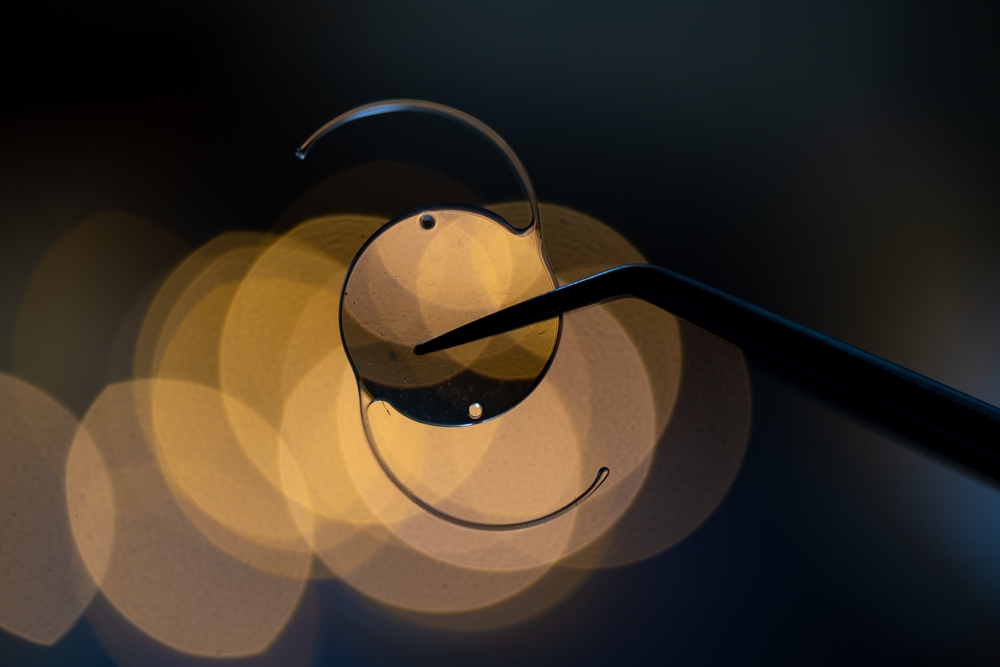
During cataract surgery, the surgeon removes the eye’s clouded natural lens and replaces it with a small, clear artificial lens called an intraocular lens (IOL). The IOL sits in the same position as your original lens, behind the iris and pupil, and it becomes a permanent part of the eye. It requires no maintenance, and most patients cannot feel it once it is in place.
Because every IOL has a specific optical design, the type of lens implant you receive determines which distances you will see most clearly without glasses after surgery. A lens implant chosen with your daily habits in mind can significantly reduce or even eliminate your dependence on corrective eyewear.
Types of Lens Implants and What They Correct
Several categories of IOLs are available today, each designed to address different visual needs.
- Monofocal IOLs provide sharp focus at one set distance, typically far away. Most patients who choose a monofocal lens will still need reading glasses for close-up tasks. These lenses are covered by standard insurance and remain the most commonly implanted IOL worldwide.
- Multifocal IOLs use concentric rings or zones to focus light at multiple distances, allowing patients to see clearly up close, at intermediate range, and far away. Some patients notice halos or glare around lights at night, particularly in the first few months after surgery.
- Extended depth of focus (EDOF) IOLs stretch a single focal point into a continuous range of vision. They tend to produce fewer halos than traditional multifocal lenses while still reducing the need for glasses at most distances.
- Toric IOLs correct astigmatism, a condition caused by an irregularly shaped cornea. Toric lenses are available in both monofocal and multifocal designs, so patients with astigmatism can still benefit from advanced lens technology.
The experienced ophthalmologists at ESNV offer a full range of premium lens implant options and help each patient understand which category best fits their visual goals.
How the Right Lens Affects Everyday Activities

The connection between lens choice and daily comfort is direct. A patient who spends hours reading or working on a tablet may prioritize near and intermediate vision. Someone who drives frequently or enjoys outdoor activities may value sharp distance clarity above all else. A person who wants freedom from glasses at virtually every distance may lean toward a multifocal or EDOF design, accepting minor trade-offs like occasional nighttime glare.
Patients with significant astigmatism face an additional consideration. Without a toric lens to correct that refractive error, even a premium multifocal IOL may leave vision slightly blurred. Correcting astigmatism at the time of surgery often delivers the crispest results.
There is no single “best” lens implant. The right choice depends on how you spend your time, what visual compromises you are willing to accept, and how strongly you want to reduce your reliance on glasses.
What to Expect During Your Lens Consultation
Choosing a lens implant starts with a comprehensive eye exam. Your ophthalmologist will measure the length of your eye, the curvature of your cornea, and the overall health of structures like the retina and optic nerve. These measurements allow the surgical team to calculate the correct IOL power for your eye.
Beyond the clinical data, your surgeon will ask questions about your lifestyle. Like:
- Do you work at a computer for most of the day?
- Do you prefer to read without glasses?
- How much nighttime driving do you do?
The answers help narrow down which IOL design will serve you best in real-world conditions.
At Eye Specialists of Napa Valley, the lens consultation is a collaborative conversation. The goal is to match your expectations with a realistic picture of what each lens type can deliver.
Life After Your Lens Implant

Most patients notice improved clarity within a few days of surgery, though full visual stabilization can take several weeks. During that period, your eye adjusts to the new lens, and your brain adapts to processing light differently. Follow-up visits allow your doctor to monitor healing and confirm that the IOL is performing as expected.
For many patients, the moment they realize they can read a book, check their phone, or drive to the store without fumbling for glasses is when the impact of their lens choice becomes real. That everyday ease is the practical reward of taking the time to choose the right implant.
The specialized team at Eye Specialists of Napa Valley has guided Napa Valley patients through this decision for over 30 years, combining advanced diagnostic technology with individualized care to help each person see their best.
Considering cataract surgery and wondering which lens implant is right for you? Schedule an appointment at Eye Specialists of Napa Valley in Napa, CA, today!